


Dermal Piercing Healing: What to Expect and Aftercare
A dermal sits in a single point of skin, so it heals differently from a piercing with an entry and an exit. What is normal while it heals, the daily routine, how to avoid snagging it, and when to get it checked.

Dermal piercing healing comes down to following your piercer's aftercare guidance and protecting the piercing from pressure and snagging. A dermal has one visible point, with a small anchor sitting under the skin, so it relies on the surrounding tissue to hold it in place, and anything that catches the top matters. Let a piercer look at it if anything changes. How long it takes depends on the placement and your body, so ask your piercer what to expect for yours.
This is general aftercare, not medical advice. It follows the guidance of the Association of Professional Piercers (APP) and what we tell clients at our studios. If you are worried about a piercing, see a doctor.
What is a dermal piercing?
Most piercings go in one side and out the other. A dermal, sometimes called a microdermal or single-point piercing, does not. A small base sits under the skin and a decorative top screws onto it at the surface. That is why dermals can go on flat areas such as the sternum, the collarbone or the hip, where a normal piercing would not sit well.
The same thing that makes them possible makes them sensitive. There is no exit to anchor the jewellery, so pressure, knocks and catching on clothes matter more than with an ear lobe. Our dermal and surface piercing page explains how we approach the placement.
Dermal piercing healing: what is normal
The Association of Professional Piercers' aftercare guidance describes what is common while a piercing heals. In short:
- The first days. Some tenderness, swelling, redness and occasional light bleeding around the top.
- The first weeks. Itching, and a whitish-yellow fluid that dries into a crust around the base of the top.
- The long middle. It can look settled on the surface while the tissue underneath is still healing. Looking fine is not the same as healed, so keep the routine going until your piercer says otherwise.
What is not normal: redness, swelling or pain that keeps increasing after the first days, heat, thick or smelly discharge, or the top starting to lift or tilt. Any of those is a reason to see your piercer, and signs of infection are a reason to see a doctor.
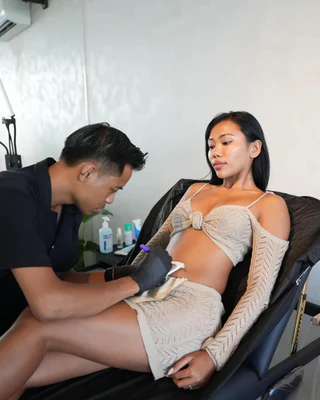
Daily aftercare for a dermal piercing
Your piercer gives you aftercare guidance for your placement before you leave, and that is the routine to follow. The Association of Professional Piercers publishes aftercare guidance that is a useful reference too. Whatever the routine, a few habits matter for a dermal in particular:
- Clean hands. Every time you touch the area.
- Hands off the top. Do not twist it or try to change it while it heals.
- Ask before adding products. Check with your piercer before anything new goes on or near the piercing, including sunscreen and lotion.
Not sure what you are seeing? Send a clear daylight photo to our Canggu team on WhatsApp, and come in if a piercer needs to see it in person.
Snagging, pressure and the top lifting
The most common trouble with a dermal is mechanical. Towels, jumper sleeves, bra straps, waistbands, seatbelts and bag straps can catch the top or press on it day after day. Repeated pressure is one of the things that can make a surface piercing move, so it is worth avoiding.
- Plan your clothes around it. A sternum dermal and an underwired bra, or a hip dermal and a tight waistband, are a hard combination while it heals.
- Be careful with towels and hairbrushes. Dry the area by patting, not rubbing.
- Cover it for sport. Ask your piercer about a breathable dressing for activities where it may get knocked.
- Do not change the top yourself. If it needs a different top, a piercer should do it.
If the top starts to lift, tilt or show more of the base than before, see your piercer early rather than waiting.

Dermals, water and the Bali heat
The Association of Professional Piercers advises against submerging a healing piercing in lakes, pools, hot tubs and other bodies of water while it heals. If you cannot avoid the water, ask your piercer what to do for your placement, and clean with saline once you are out. Our answer on swimming after a new piercing in Bali goes through the water rules, and the full routine is in our piercing healing guide.
Sweat and sunscreen are the other Bali factors. Rinse after the beach, keep sunscreen off the piercing itself, and change clothes that rub when they are damp.
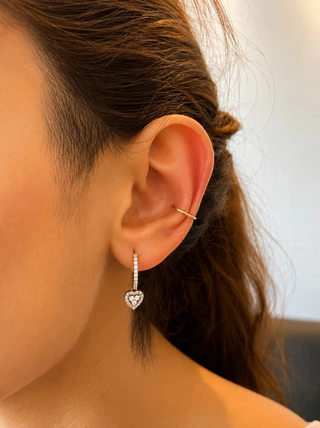
Getting a dermal at Amor Fati
A dermal depends on placement and anatomy more than most piercings, so our piercers look at the area with you before deciding. Some spots suit a dermal; others do not, and we will say so. The full list of placements is on our piercing page.
Ask us about a dermal piercing
Send us the placement you have in mind and a photo of the area on WhatsApp, and a piercer can tell you whether the placement looks suitable. Canggu and Uluwatu are open from 9:00 to 21:00, Seminyak from 9:00 until midnight. Directions are on the Canggu, Uluwatu and Seminyak studio pages.
Sources: the Association of Professional Piercers aftercare guidance and troubleshooting guide.
How long does a dermal piercing take to heal? It depends on the placement, your body and how well it is protected from pressure and snagging. Ask your piercer what to expect for your placement, and keep the routine until they say it has healed.
How do I clean a dermal piercing? Follow the aftercare guidance your piercer gives you for your placement, with clean hands every time, and leave the top alone. Ask before putting any new product on it.
Why is my dermal piercing lifting? Pressure, snagging and anatomy can all make a dermal move towards the surface. See your piercer early rather than waiting or pushing it back yourself.
Can I swim with a new dermal piercing? Not while it heals. The APP advises against submerging a healing piercing in pools, hot tubs and other bodies of water. Ask your piercer if you cannot avoid it.


