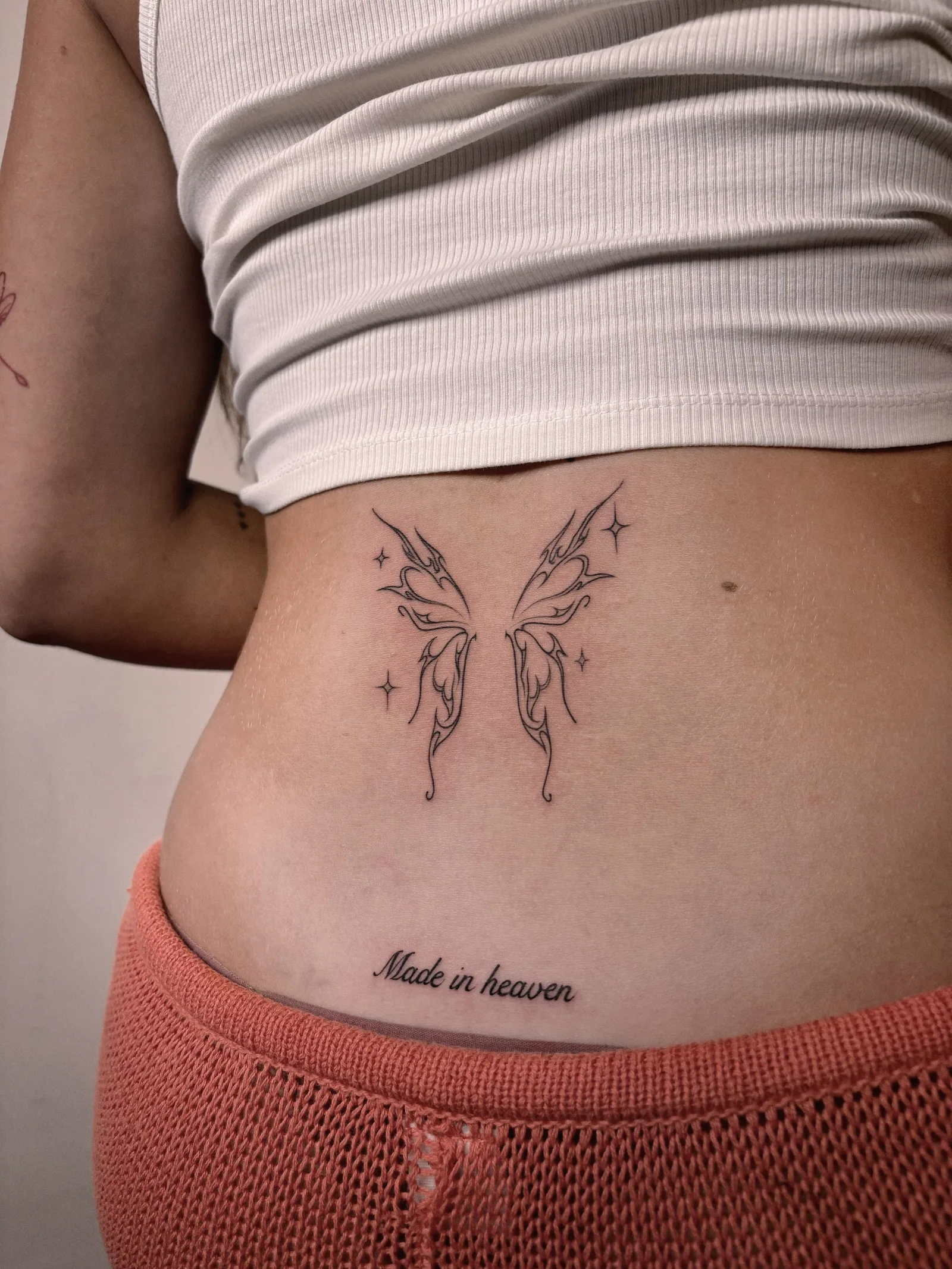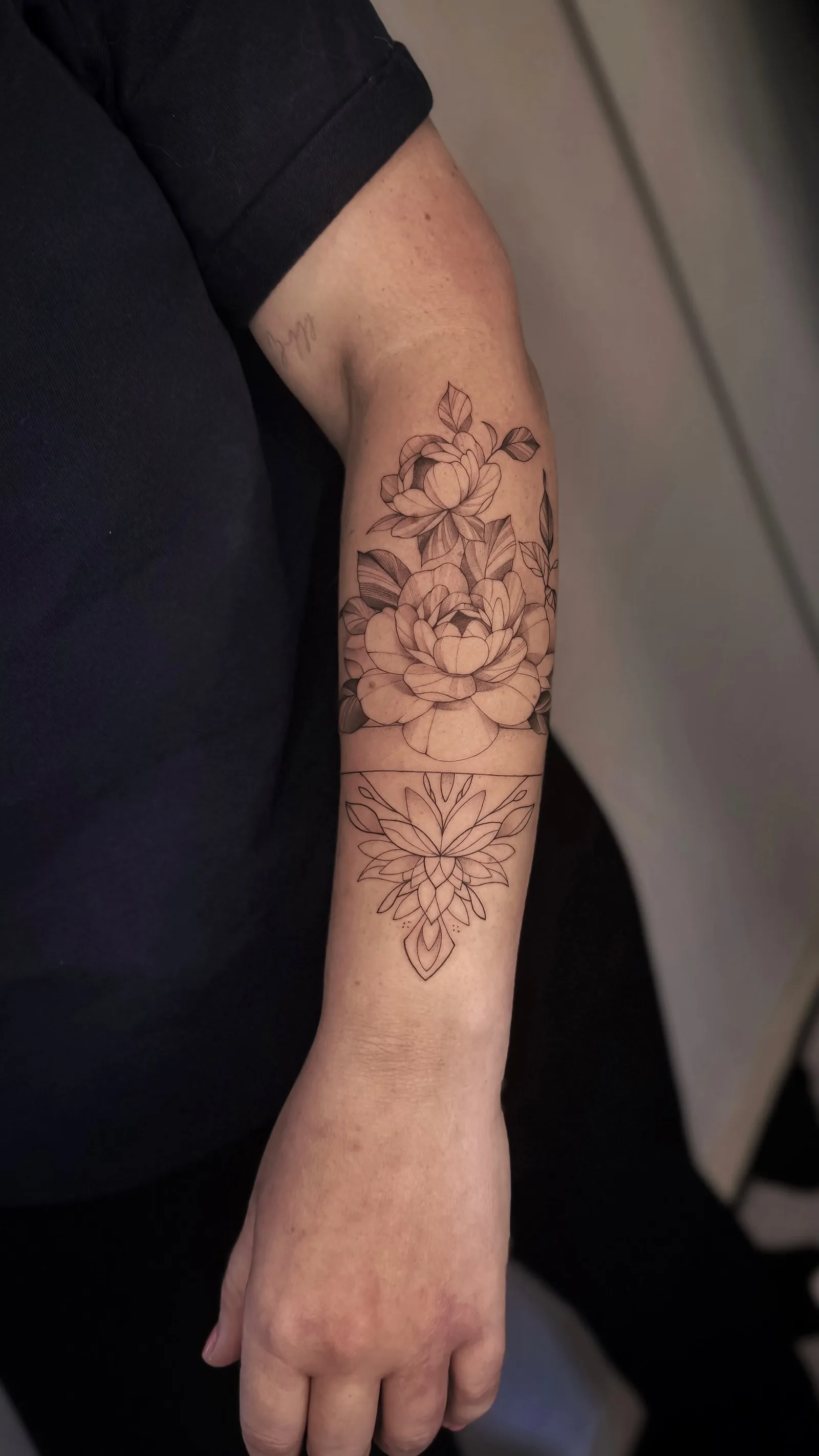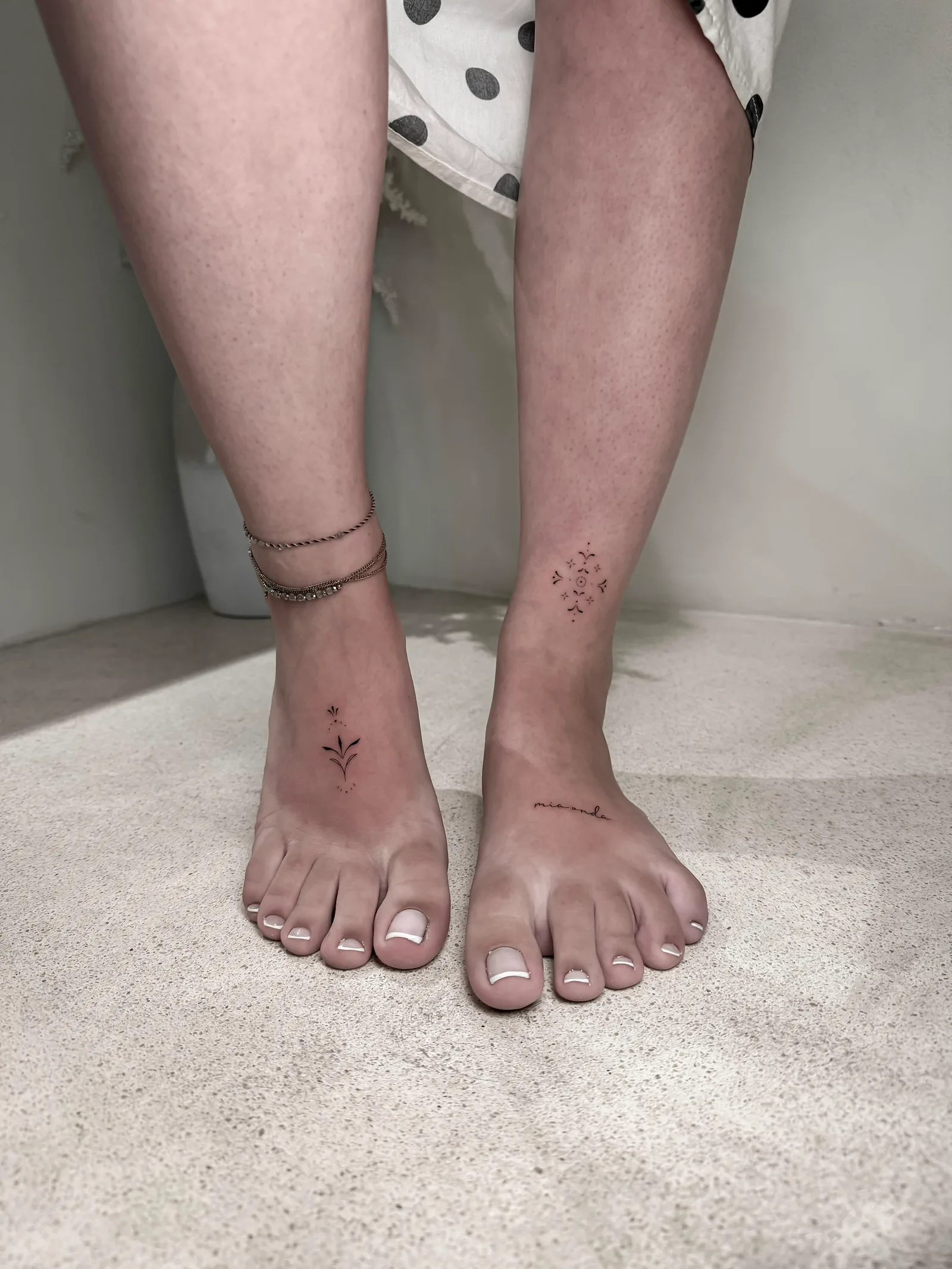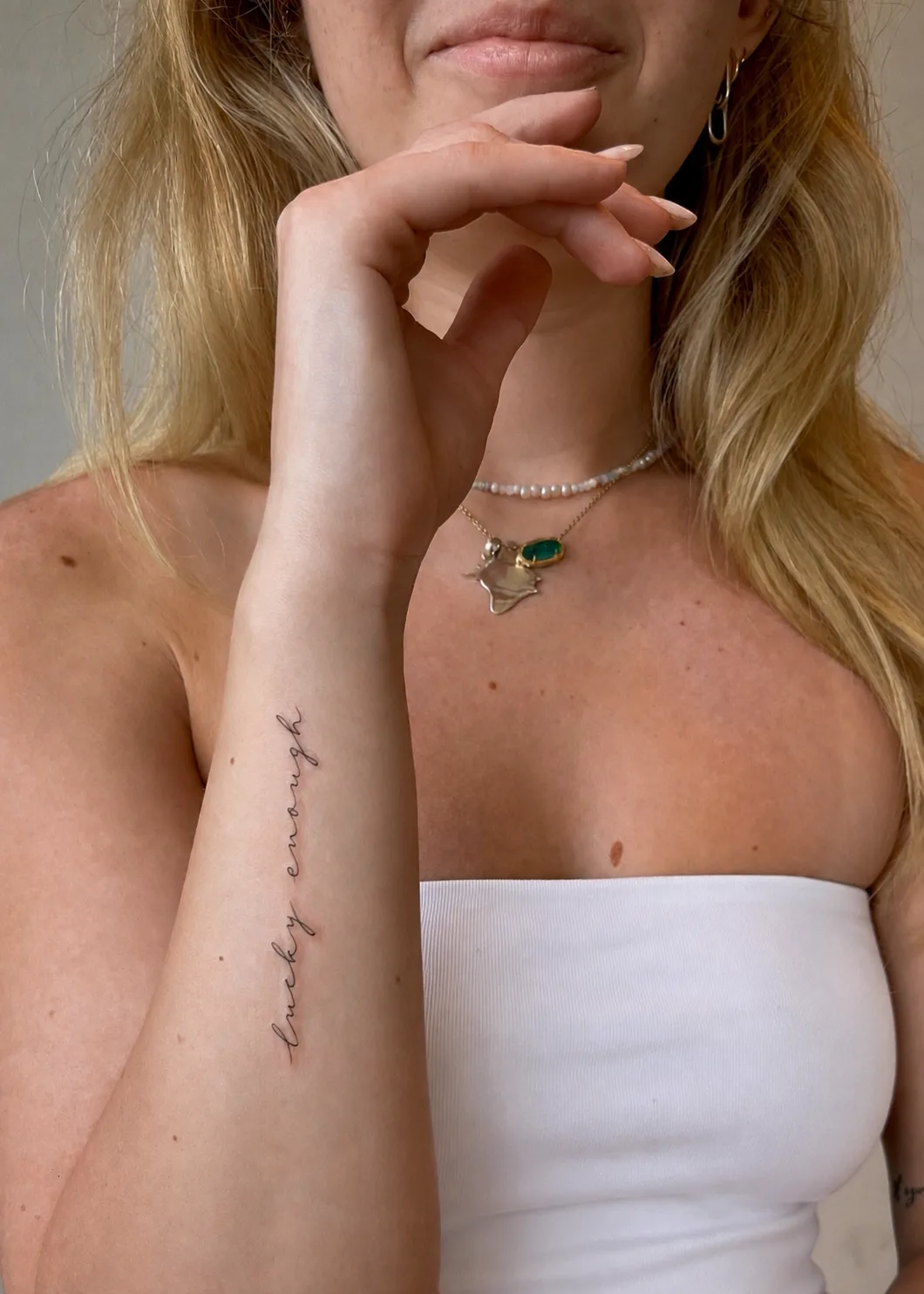
Fine Line ArtMost loved
Elegant & Decorative
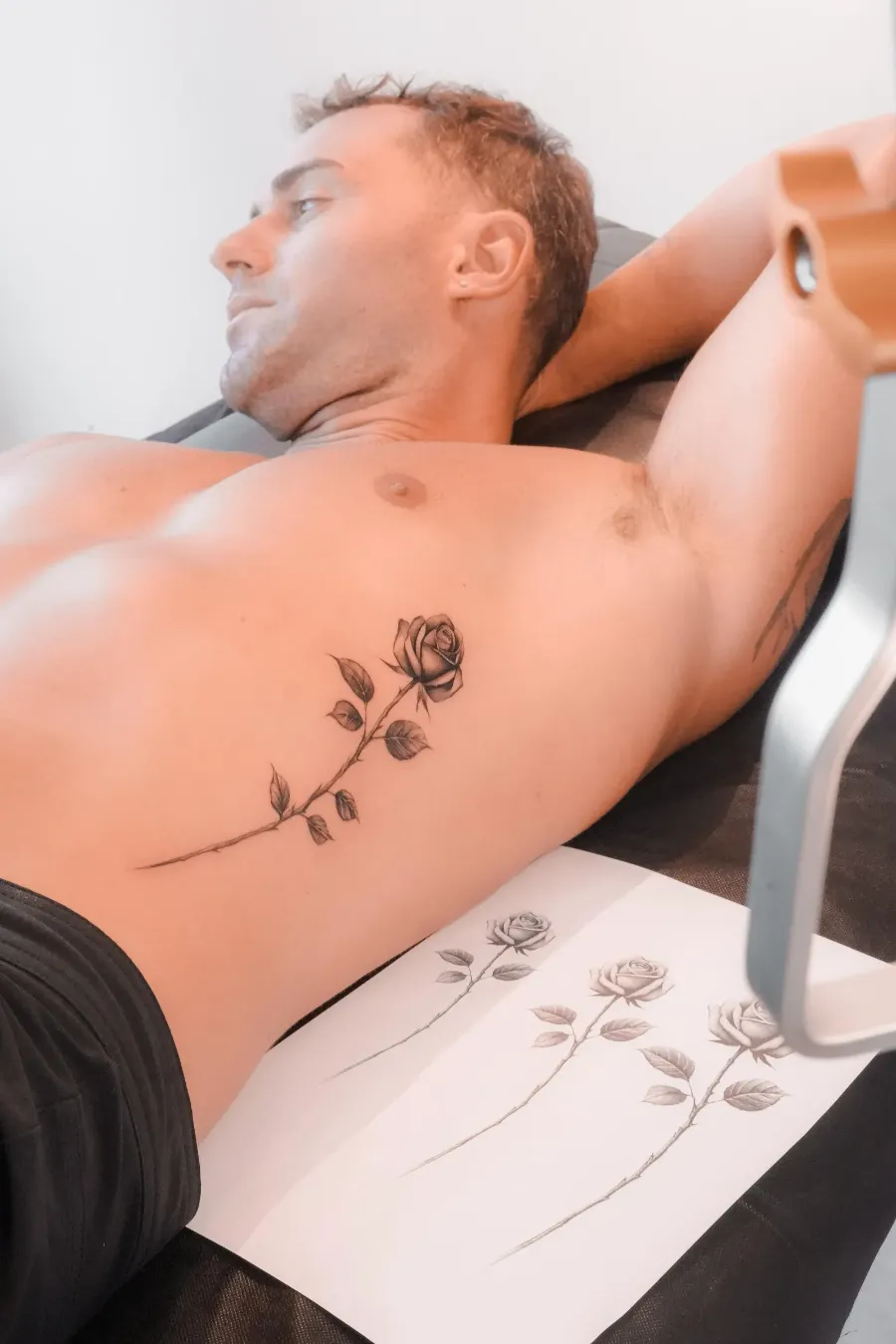
Floral & BotanicalMost loved
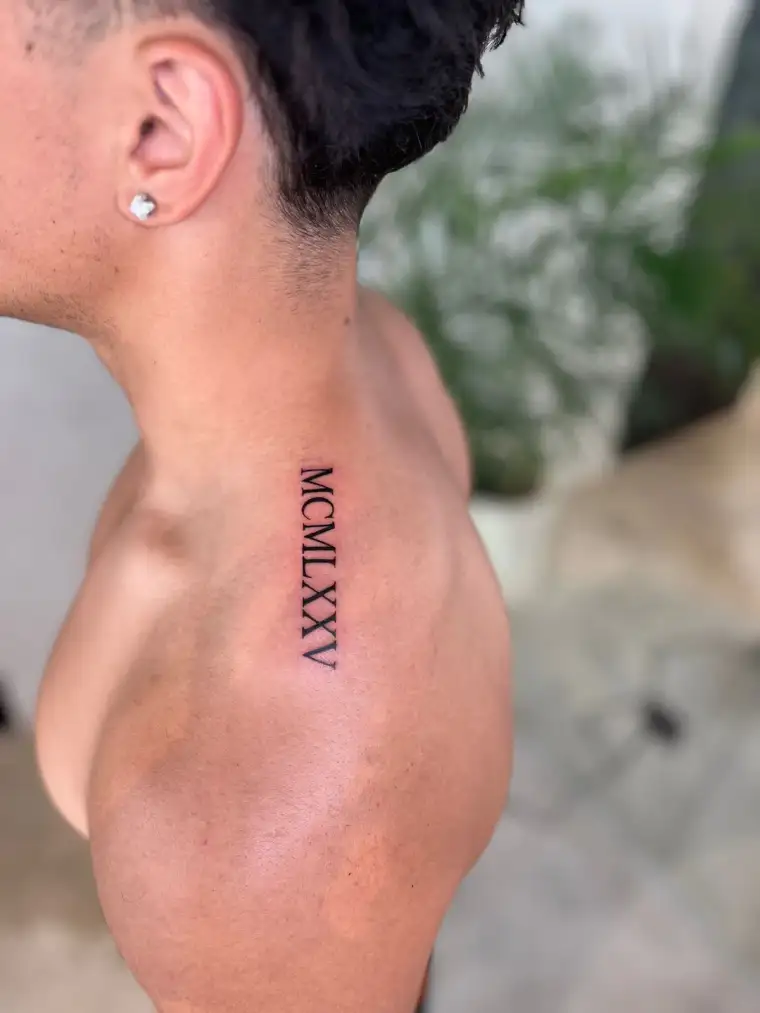
Letterings & NumbersMost loved
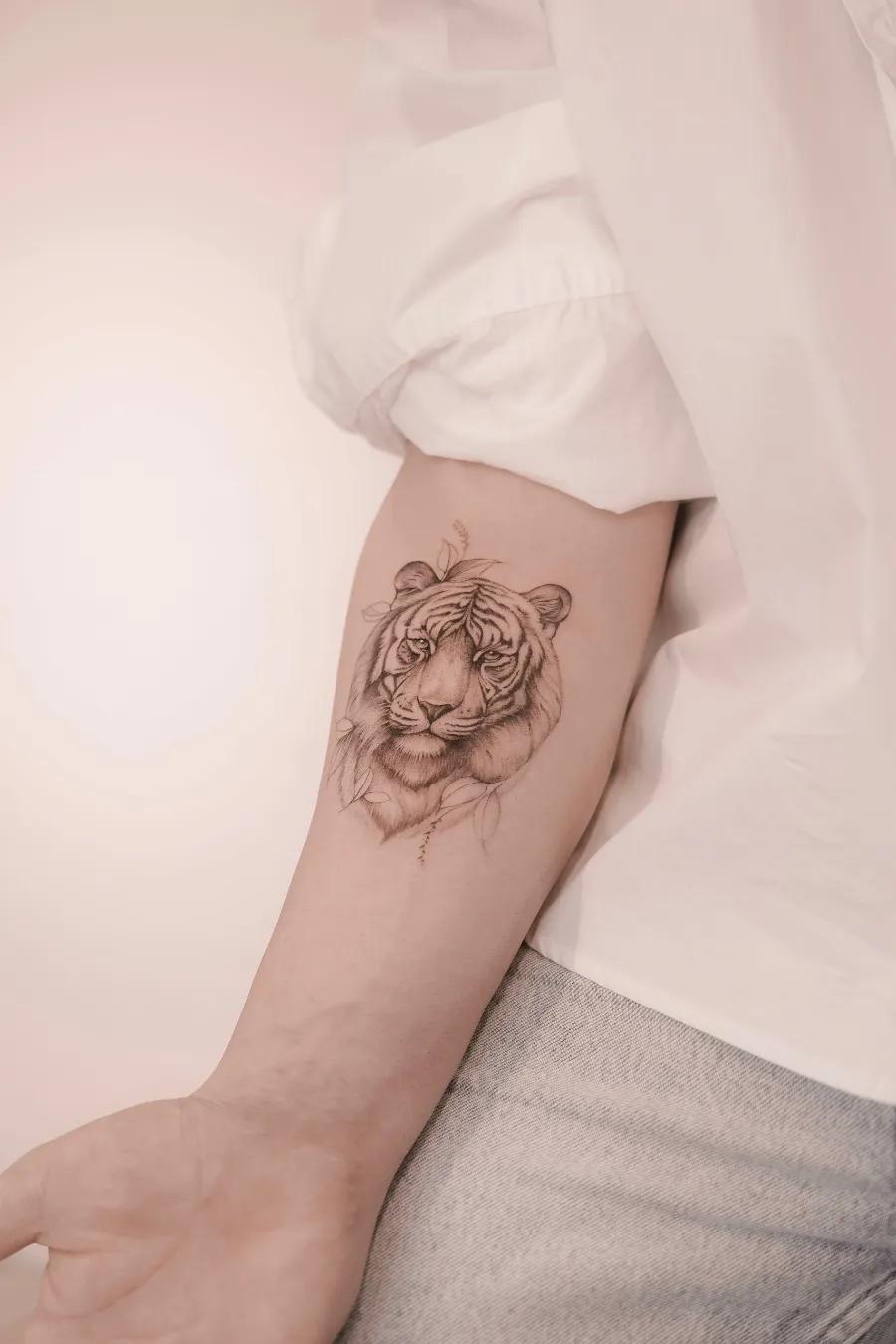
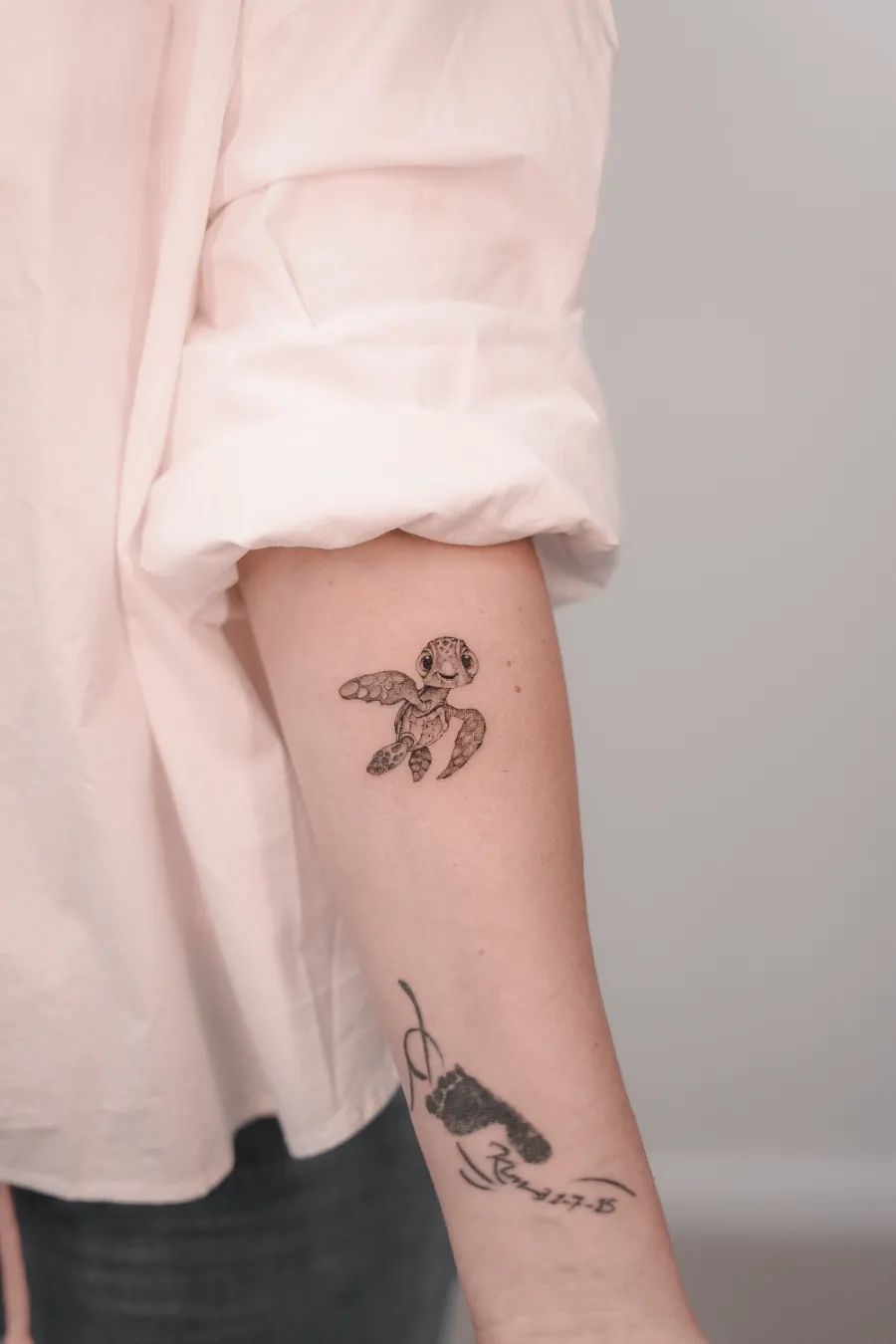
Pets & Animals
Men’s favorites
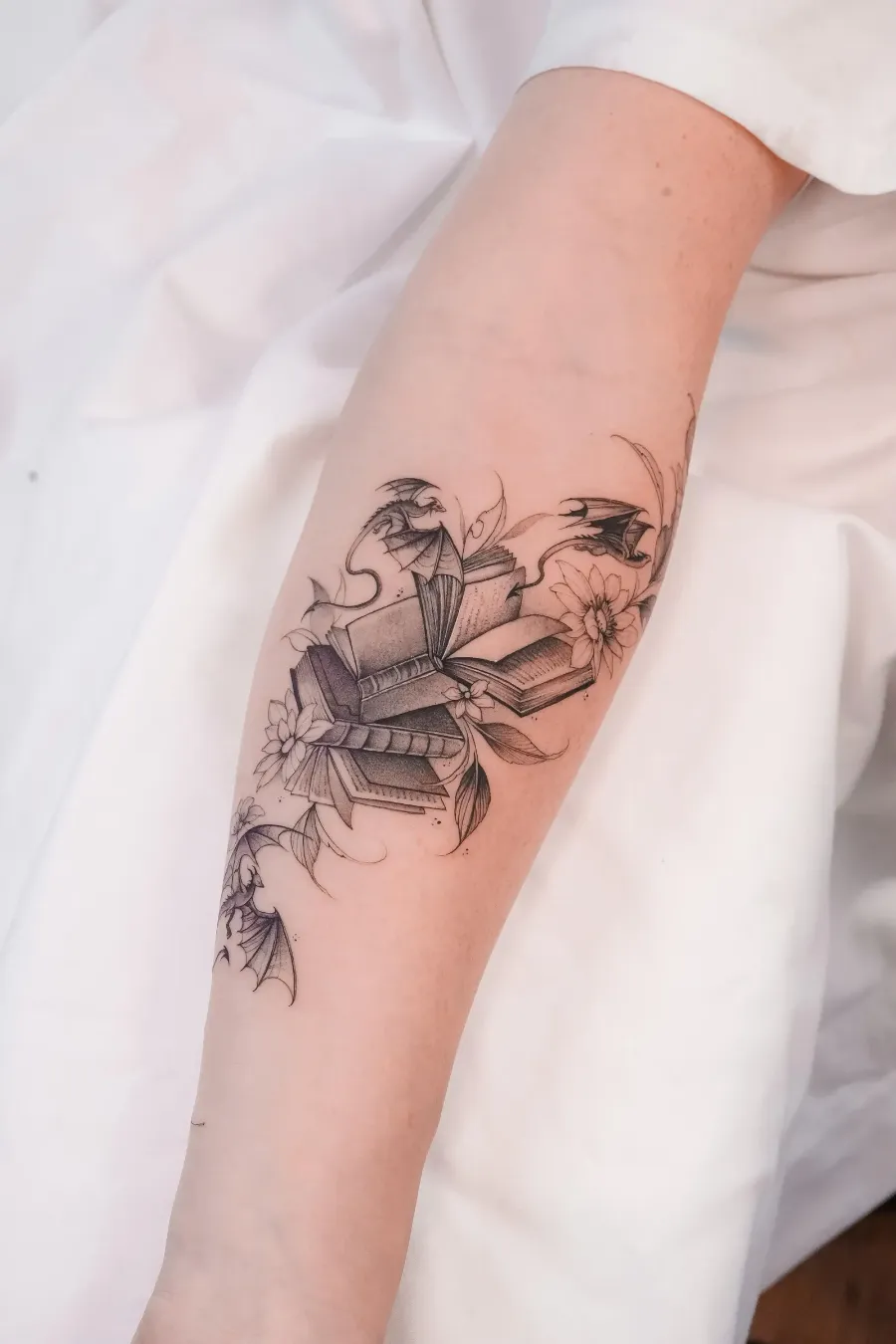
ConceptualTrending
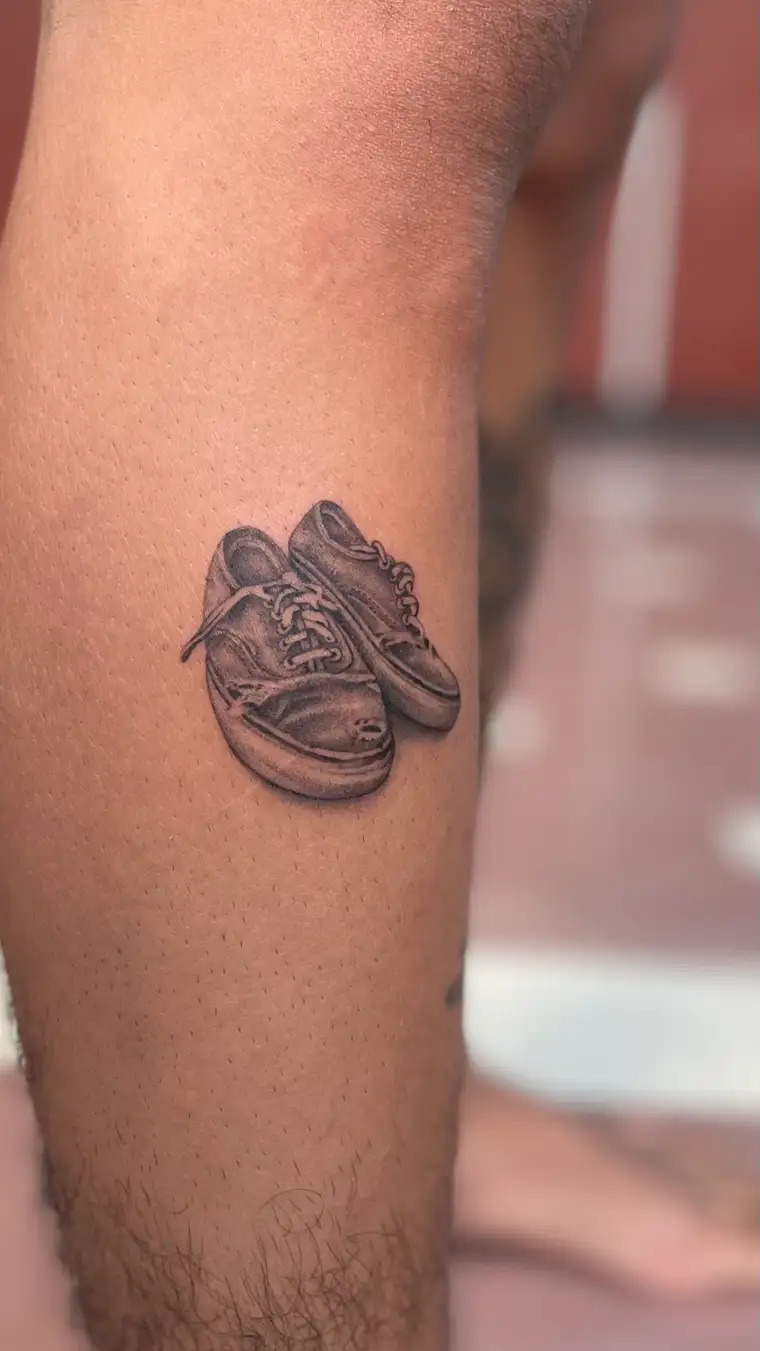
Micro Realism
Realism
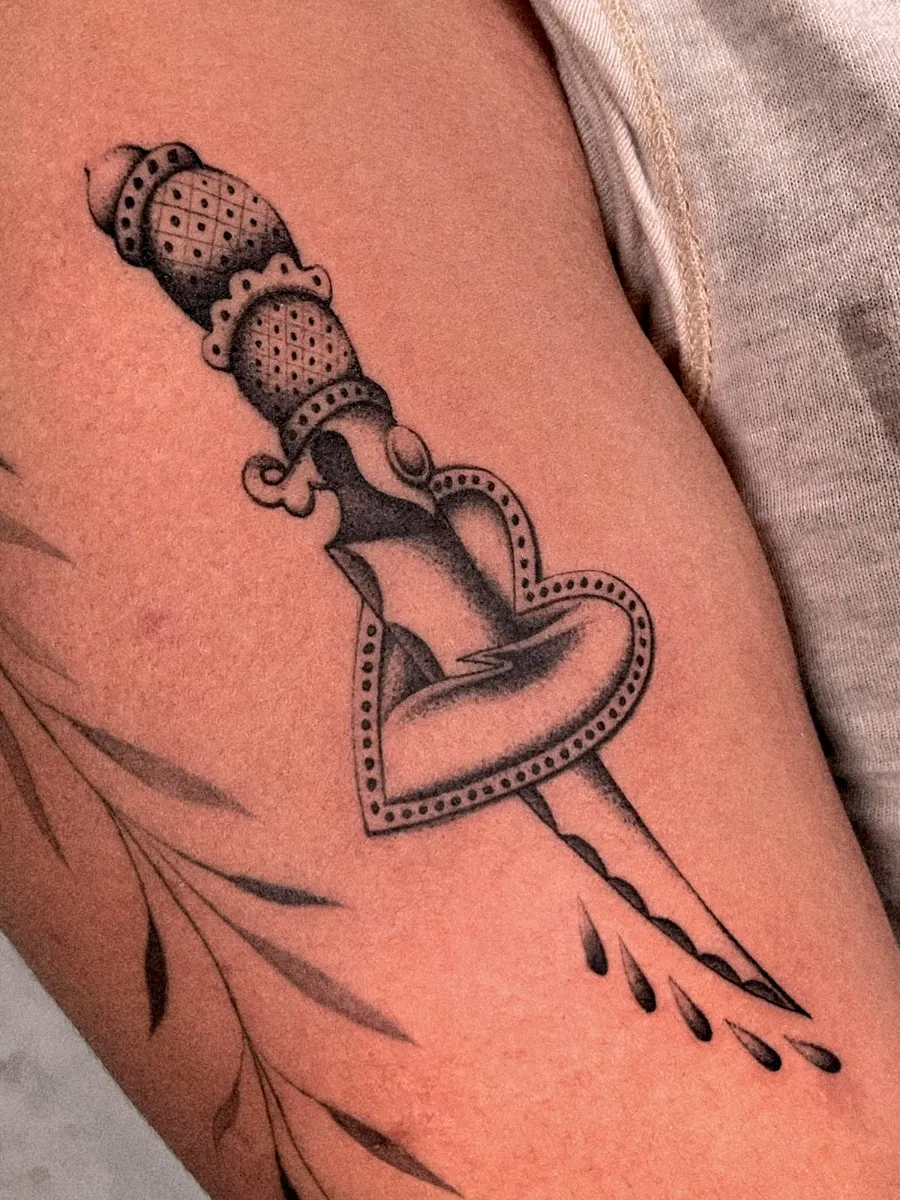
Traditional
Pets & Animals
Bali memories
Bali AnimalsMost loved
Balinese Masks & Symbols
Island FlowersTrending
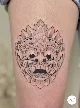
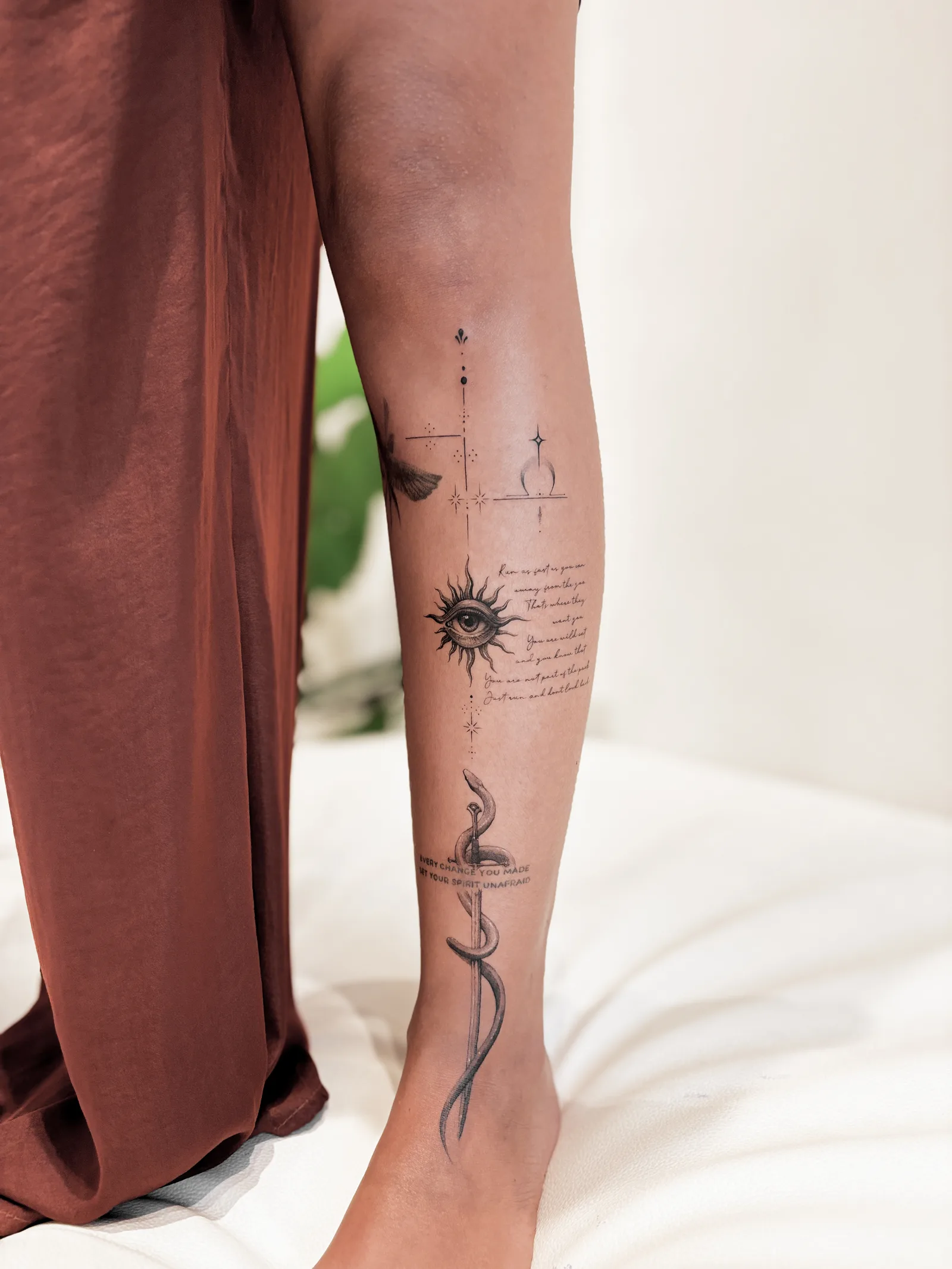
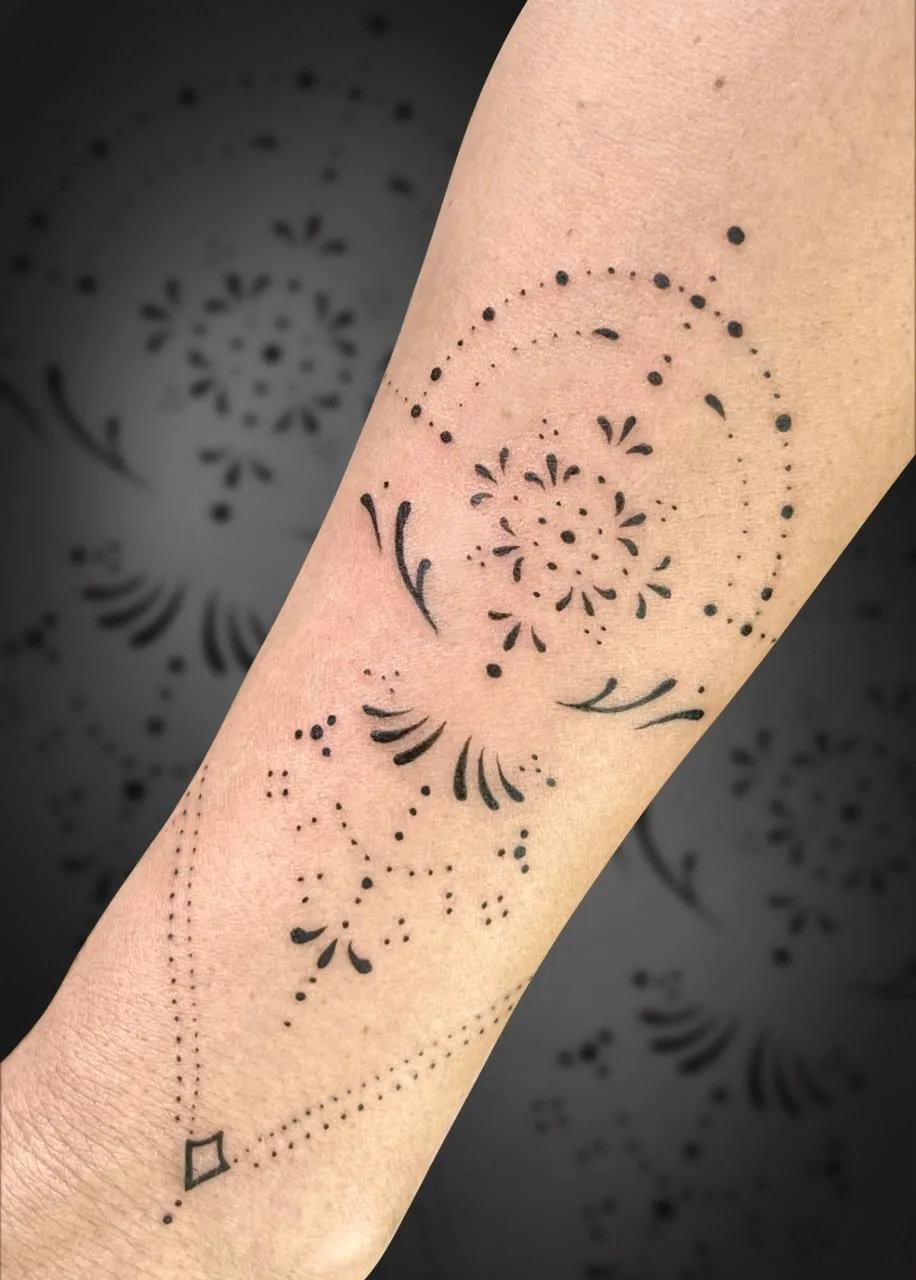
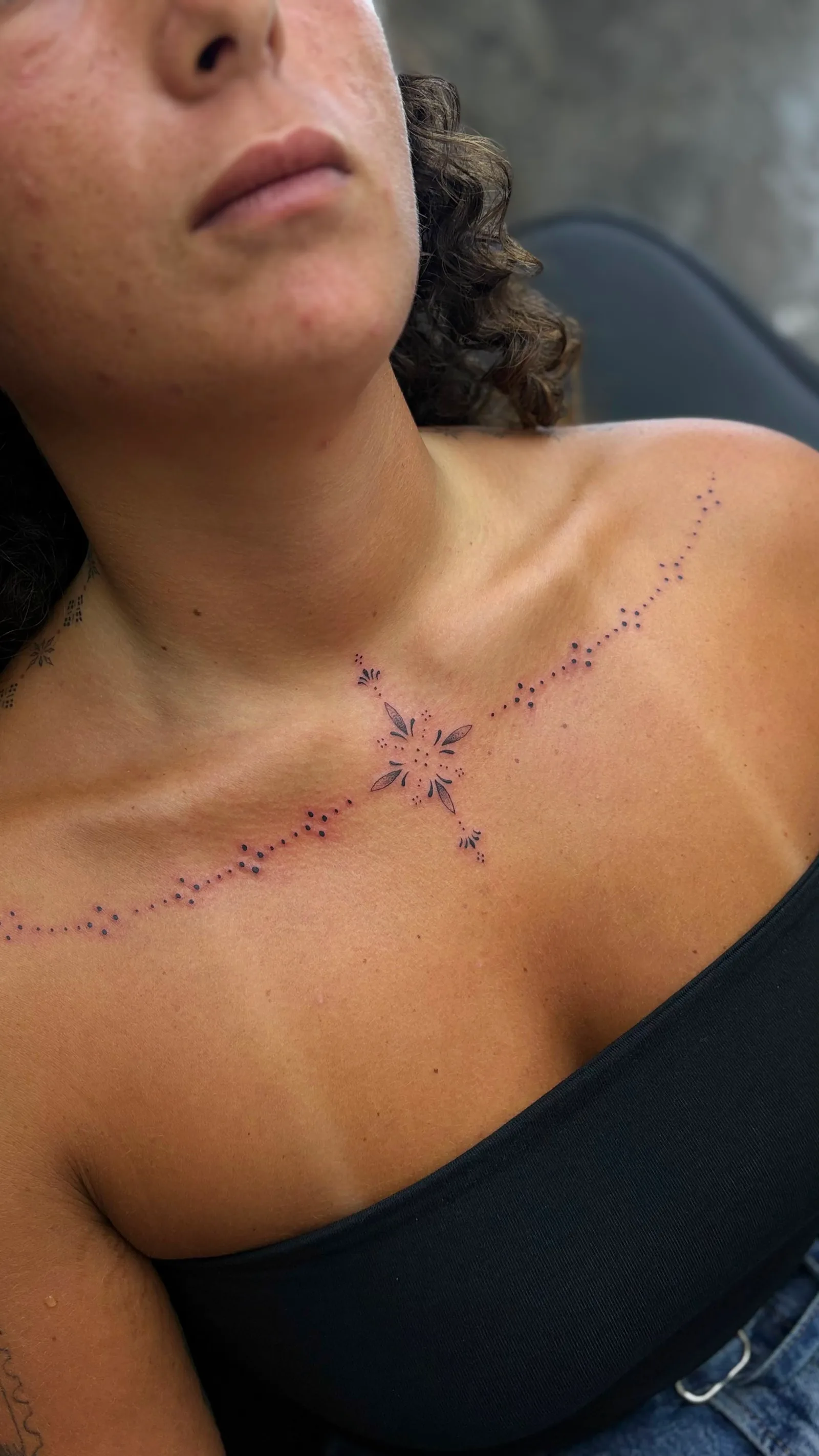
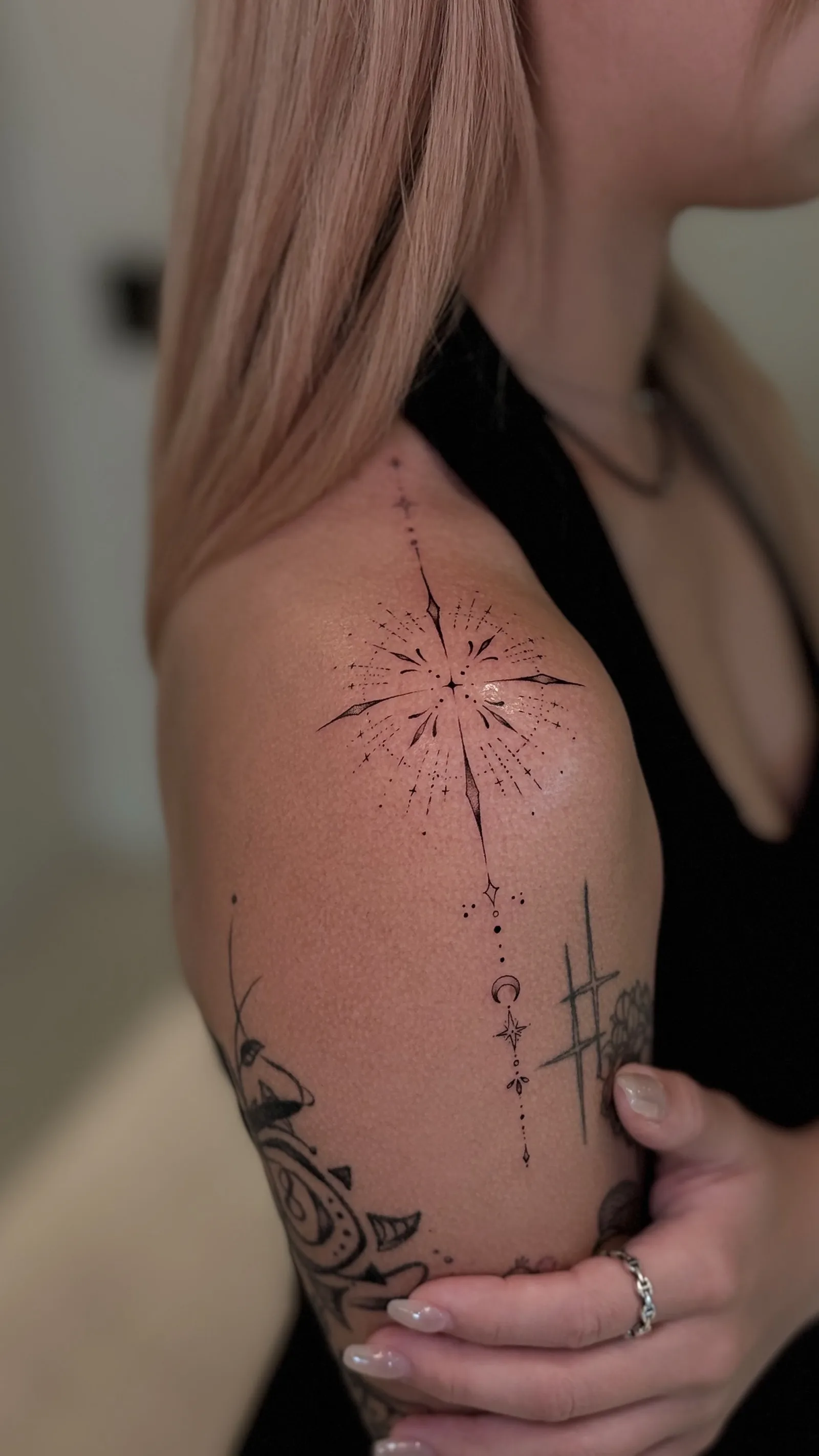
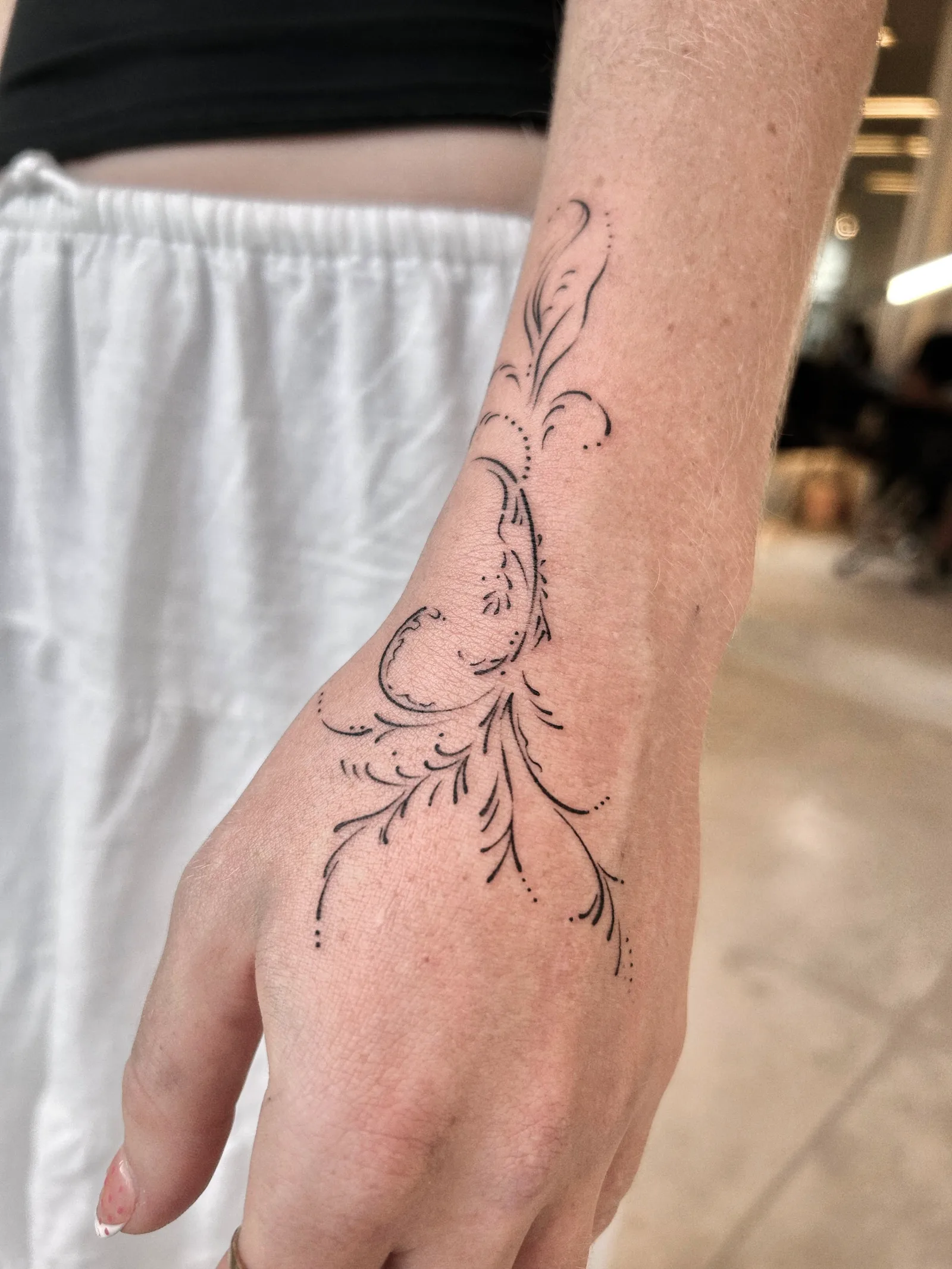
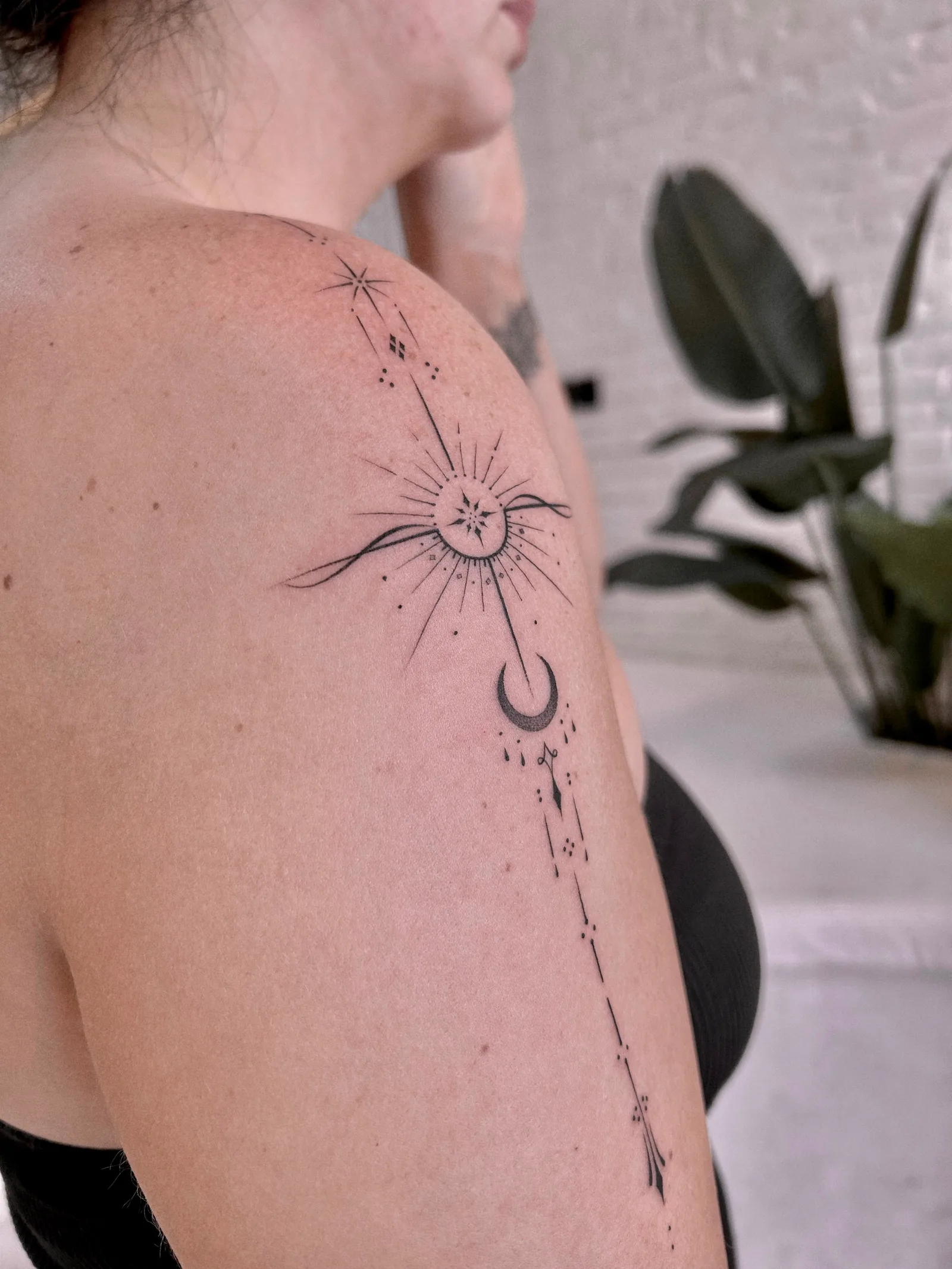
Ornamental tattooing borrows from jewellery and architecture rather than pictures. Mandalas, filigree, lacework and repeating geometry, placed to follow the body rather than sit on it. It is the most structural work we do, and the least forgiving of a wandering line.
Filters open the full portfolio with that selection applied.
Ornamental tattooing is decorative rather than representational: it does not depict a subject, it builds pattern. Mandalas, filigree, lace panels and repeating geometry are drawn to a grid and then bent to the body's own curves, so the piece reads as an object worn rather than an image applied.
The reference points are older than tattooing — temple carving, textile borders, metalwork, illuminated manuscript margins. That is why a good ornamental piece tends to look like it belongs on the arm it is on. It is designed for that arm, at that size, at that angle.
Symmetry is what makes ornamental work look expensive and what makes it fail. The body is not symmetrical, so a mandala stencilled flat will sit crooked the moment the arm moves. Every piece is drawn on the skin, checked standing, and adjusted before a needle is used.
We build these from a centre line outward. Dot shading fills the negative space and holds the structure; solid black anchors the edges. Get the centre line wrong and no amount of detail rescues it — which is why the stencil stage on an ornamental piece takes longer than on almost anything else we do.
Ornamental work wants a flat, wide plane and a clear centre line. Sternum, spine, outer forearm, the front of the thigh and the back of the hand all give the pattern somewhere to resolve. Curved, high-movement areas fight the geometry.
The sternum and spine are the two placements that most reward this style, because the body gives you the axis for free. Forearm panels work when the design wraps deliberately rather than pretending the arm is flat.
Ornamental pieces are priced per design, never per hour. A small decorative panel runs 2M–5M IDR (≈ $120–$310). A sternum or full forearm ornament sits in the 5M–15M IDR band (≈ $310–$930), and full back or sleeve work is quoted after a consultation.
We quote a range once we have your reference, the size in centimetres and the placement, then the artist confirms. We do not give a final number for anything over 10cm by message — for those we book a free 20–30 minute consultation, because the price depends on how the pattern has to be drafted for your body.
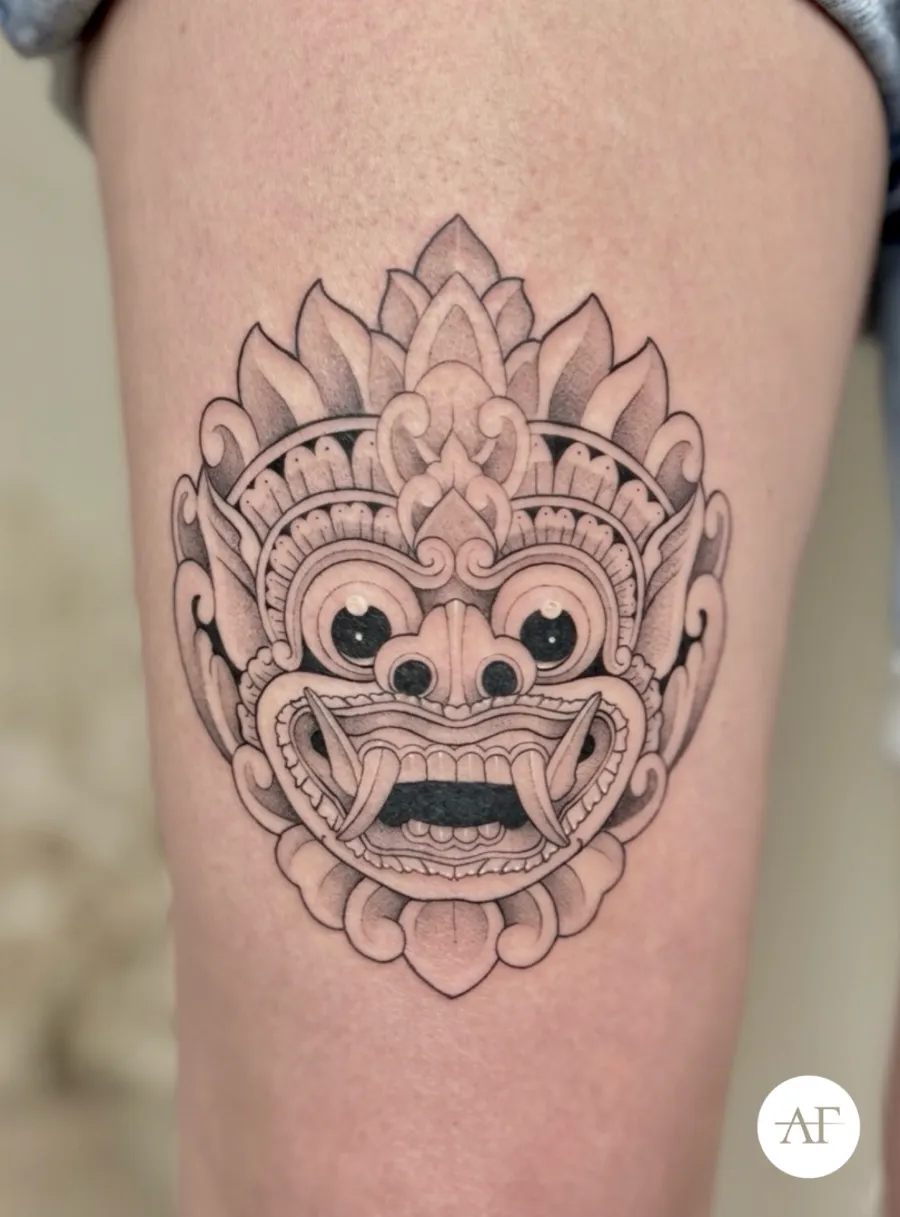
Ornamental work ages better than almost any other style, because it is built from solid black and deliberate negative space rather than fine grey transitions. The pieces that fail are the ones packed too densely — detail with no gaps closes up over ten years and reads as a dark patch.
We leave space on purpose. If a design arrives with filigree finer than the skin can hold at that size, we will say so and scale it up rather than tattoo something that looks sharp for two years. In Bali sun that judgement matters more than it does in Europe.
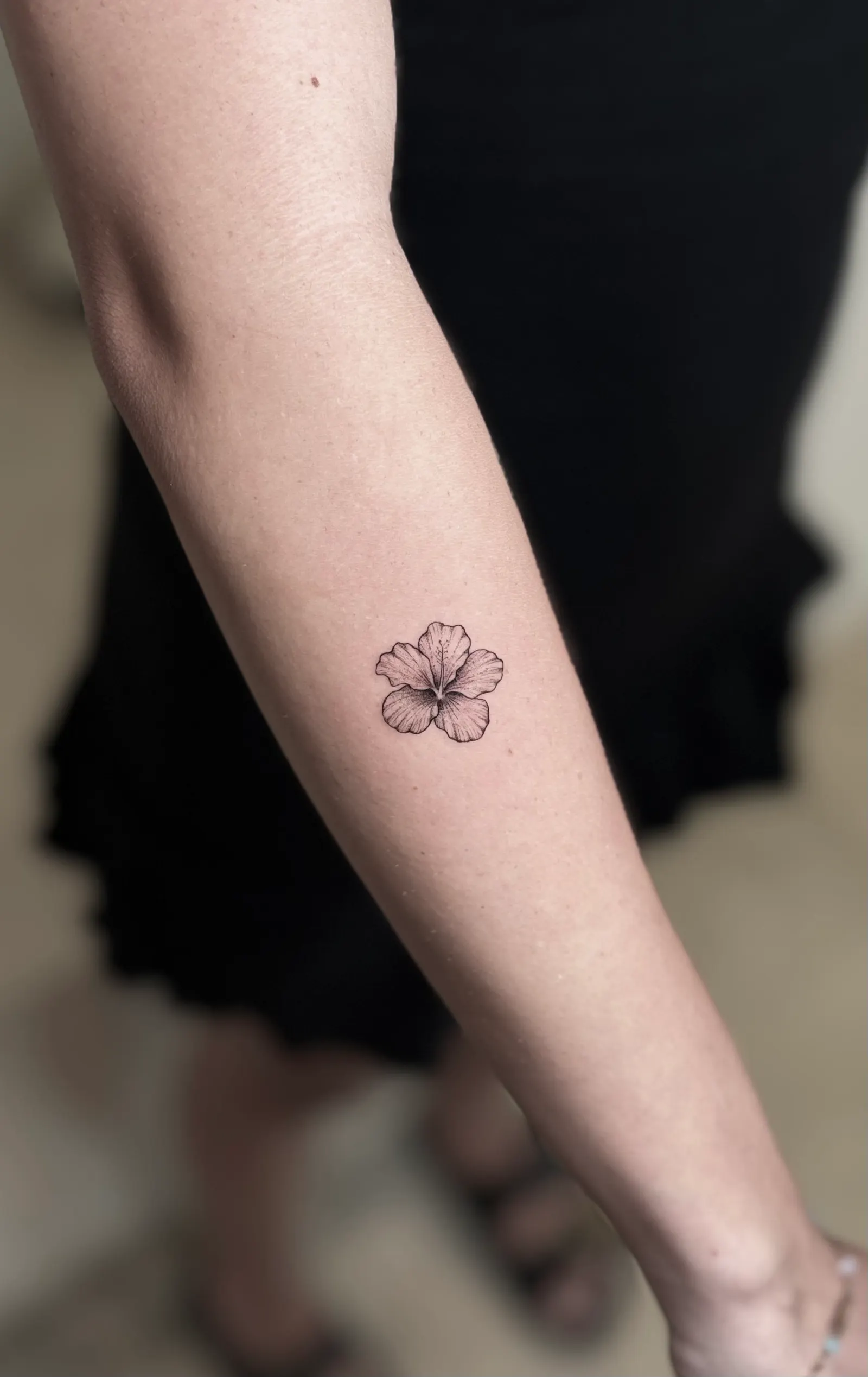
Ornamental and blackwork sit with our resident artists across all three studios — Canggu, Uluwatu and Seminyak run the same standard, the same artists' level and the same prices. If a specific artist's portfolio is the reason you are booking, tell us in the enquiry and we will route you.
All three studios are open daily, single-use needles only, and every consultation is free whether or not you book.
Small ornamental panel (5–10cm) — 2M – 5M IDR (≈ $120 – $310). Priced per design, never per hour. Card payments carry a 3% surcharge, stated before any link is sent.
Often, yes. Ornamental patterns absorb an existing shape better than most styles because the geometry can be built around it. Send a clear photo in daylight and we will tell you honestly whether it works or whether a cover-up is the better route.
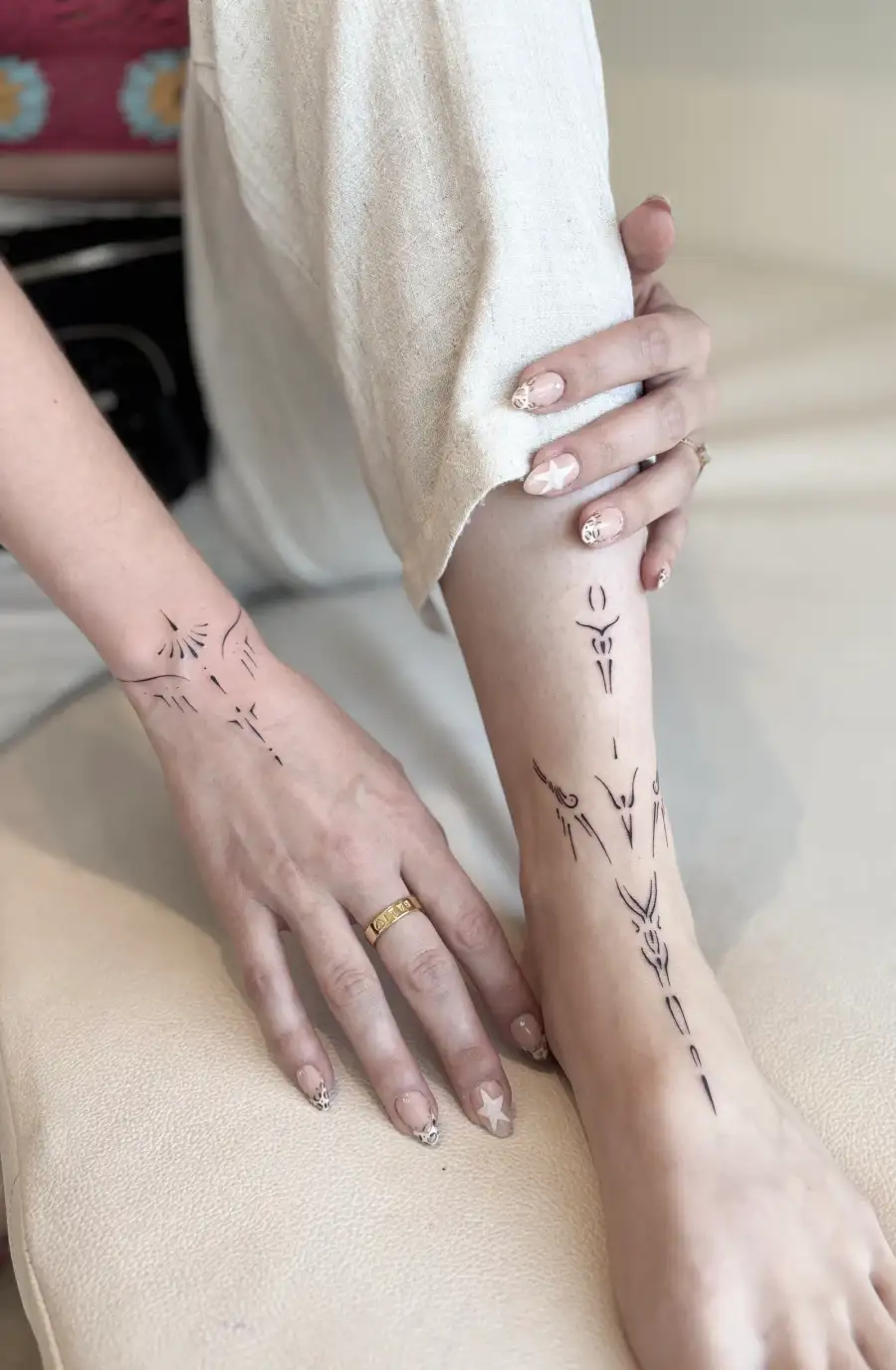
A small panel is a single 2–3 hour sitting. A sternum piece is usually 4–6 hours. Larger backs and sleeves run across multiple sessions, and we price and book the whole piece up front so you know the number before we start.
It takes longer over the same area, so it is more tiring rather than sharper. Sternum and spine are the two placements clients report as most demanding, and we build breaks into those sessions.
If it is drawn with enough space in it, yes. That is the main reason we push back on designs that are too dense for their size — we would rather make it slightly larger than watch it close up.

Tell us what you're carrying and where you want it. We'll draw it, quote it once, and hold a slot for you.
All three run the same level of artists, the same standard and the same prices. Pick whichever is closer, we answer on WhatsApp.