


Tattoo Pain Chart for the Least and Most Painful Spots
Compare common descriptions of tattoo pain by body area and see how the design, placement and pace can shape a first appointment.

Our tattoo pain chart puts the outer upper arm, outer forearm and outer thigh at the gentler end. Ribs, sternum, spine, feet and fingers are commonly described as sharper or harder to sit through. The numbers are a rough comparison of how people describe these placements. They can't tell you what your session will feel like. If you're deciding between two places for a first piece, compare what each allows you to do with the design as well as where it falls on the chart.
Tattoo pain chart by placement
Use 1 for the gentler end of the comparison and 5 for the more intense end. Each row compares a placement in general. A tiny outline and a filled design that covers the same area can feel quite different. If an individual spot falls between two rows, use them as a starting point for a conversation with your artist.
| Area | Pain (1 to 5) | What people often mention |
|---|---|---|
| Outer upper arm and shoulder | 1 to 2 | Often described as one of the gentler spots |
| Outer forearm | 1 to 2 | A common first-tattoo spot |
| Outer thigh and calf | 2 | Often described as manageable |
| Back of the shoulder and upper back | 2 to 3 | Some find it sharper near the shoulder blade |
| Inner forearm and inner upper arm | 3 | Often described as more sensitive |
| Collarbone and behind the ear | 3 to 4 | Often felt as sharper close to the bone |
| Ankle and top of the foot | 4 | Often described as sharp |
| Hands and fingers | 4 | Often described as sharp |
| Spine | 4 | Many people mention a buzzing feeling |
| Ribs and sternum | 4 to 5 | Often named as one of the hardest |
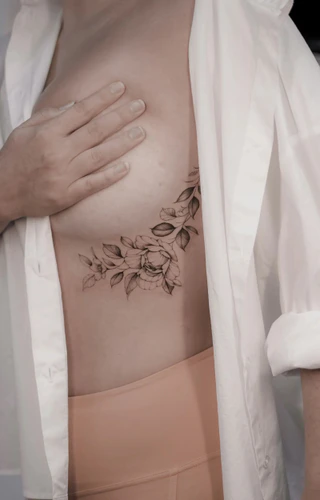
Often gentler spots for a first tattoo
The outer upper arm gives you room to try a design under a sleeve. A small shape can go near the shoulder or lower down, where the same design might read differently with the arm relaxed. The outer forearm is easy to see in a mirror and gives longer designs, such as a stem or a line of script, a clear direction. The outer thigh is worth considering if you want room for a larger drawing or want to see how it looks with different hemlines.
Choose the position you actually like. If you've been saving references of floral pieces that follow the ribs, ask whether an upper-arm version would still have the curve you want. A first tattoo on the arm can work beautifully in its own right. Try a sketch both ways so you have something concrete to compare.
Where a tattoo can feel more intense
Ribs and sternum
People often describe the ribs and sternum as sharp. A stem that runs along the side of the torso and an ornamental design centred at the sternum ask you to sit in different positions. If you're set on either one, ask how your artist would place the stencil, whether you can change position for breaks and which parts of the design will take the longest to work.
Spine, feet and fingers
Some people describe a vibration with spine tattoos. Small foot and finger tattoos can still feel sharp because of where they sit. Be specific when you ask about a placement. “Across my knuckle” and “down the side of one finger” give an artist different designs to think through. For a foot piece, bring a reference showing where it should end relative to the ankle and toes.
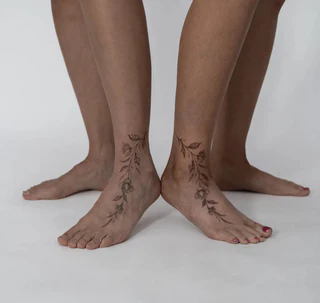
If you're choosing between placements, send the sketch and both locations to our Canggu studio. We can discuss which position suits the shape and what the session would involve. Ask for a quote once you've narrowed down the design.
What a tattoo feels like
A scratch, a prickling line and a steady scrape are all common descriptions. An outline can feel sharp even in a short stretch. If your design also has shading or fill, you may notice the change in rhythm when the artist switches from outlining the edges to working inside them. Tell the artist how you're doing in ordinary words. “I need a moment to move my shoulder” gives them more to work with than trying to choose an exact pain score while they're tattooing.
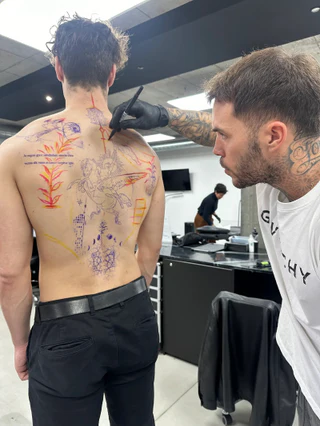
How design changes the session
Ask about detail and coverage as well as height and width. Two designs the same size can call for very different work. A simple leaf outline leaves the inside open. A leaf with fine veins and a dark shadow has extra lines and filled areas. A piece that wraps around an arm may also need you to change position so your artist can reach each part.
Ask which elements matter to the drawing and which are optional. If you love the silhouette, your artist may be able to simplify the inside. If you want to keep the fine detail, it may make sense to use a larger placement and allow more time. Look at our fine-line portfolio to see how sparse and detailed work compare.
Talk about breaks before you start
Tell the artist if it's your first time or if you're worried about holding a position. Agree on how to ask for a pause, so you don't have to decide in the moment. Before you sit down, put your water somewhere you can reach during a break and give yourself room in the schedule. Our first tattoo session walkthrough covers the appointment from stencil to finish. Use our aftercare guide when planning around the rest of your trip.
Leave space after the appointment in case you want to take your time getting back to where you're staying. If Bali friends are joining you for dinner, choose somewhere close or tell them you'll confirm when you're finished. An unhurried slot also gives you time to look closely at the stencil.
When you're ready, send Amor Fati your design, approximate size and placement. Tell us if you're deciding between two spots or want to talk about keeping your first appointment manageable.
What is the least painful place for a first tattoo? The outer upper arm, outer forearm and outer thigh are often described as gentler. Start with a placement that also suits the shape of your design.
Are rib tattoos more painful than arm tattoos? Ribs are often described as sharper than the outer arm, but people experience both differently. Ask how the design and positioning will shape your session.
Does a smaller tattoo hurt less? A small, simple tattoo can take less time. The sensation still depends on the placement, the design and how it feels to you.
Can I ask for a break during my tattoo? Yes. Tell the artist before you begin if you're nervous or if holding the position may be difficult, and agree on how to ask for a pause.


